
You have been thinking about trying kickboxing for beginners for weeks — maybe months. You keep scrolling past gym photos, watching highlight reels, telling yourself you will sign up “next Monday.” But something holds you back. Maybe you are worried you are not fit enough. Maybe you do not know what gear to bring. Or maybe you just have no idea what actually happens inside a kickboxing class, and the unknown feels intimidating.
Here is the truth: every single person in that gym felt exactly the same way before their first class. Kickboxing is one of the most welcoming, beginner-friendly combat sports you can try — you do not need to be in shape to start, you do not need any experience, and nobody expects you to spar on day one. This guide walks you through exactly what to expect, what to bring, and how to prepare so you can walk into your first kickboxing class with confidence instead of nerves.
What Is Kickboxing? A Quick Overview for Beginners
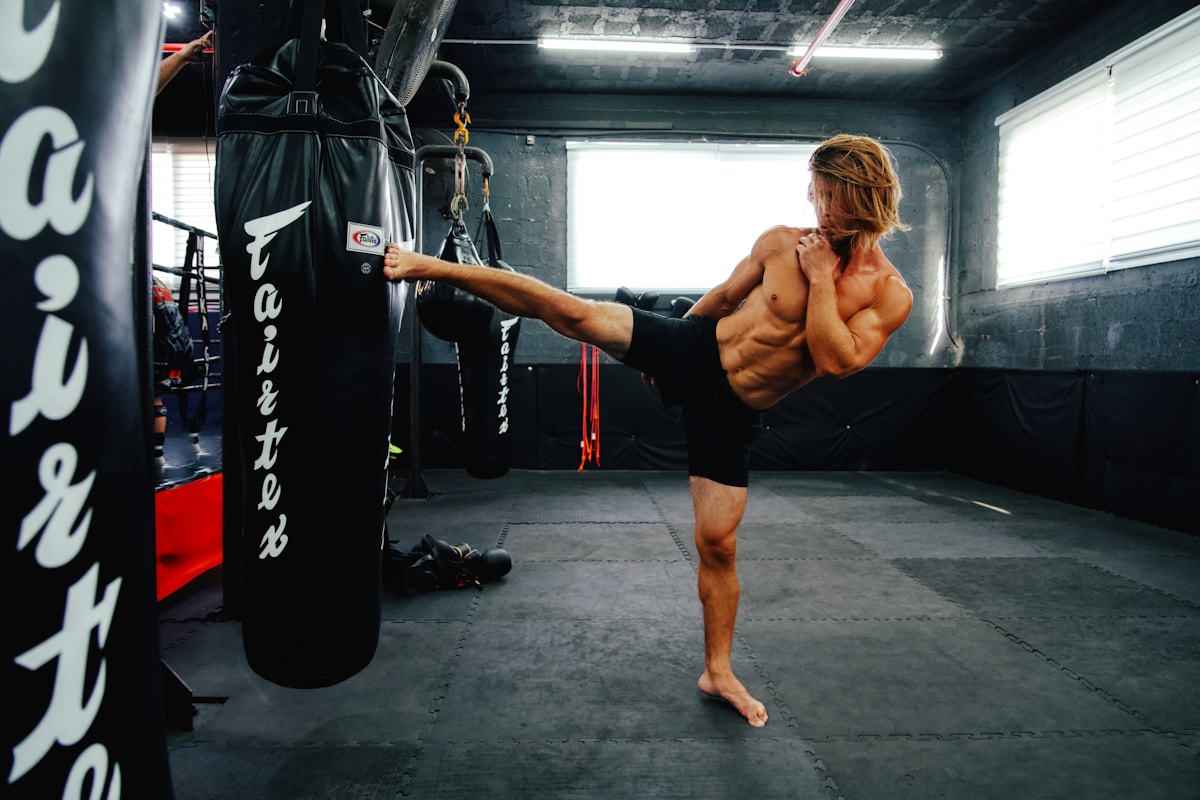
Kickboxing is a striking martial art that combines punches from boxing with kicks from traditional karate and Muay Thai. Unlike pure boxing (hands only) or Muay Thai (eight limbs including elbows and knees), kickboxing focuses on the four-point striking system: both fists and both feet. You will learn jabs, crosses, hooks, and uppercuts — plus roundhouse kicks, front kicks, and side kicks — all woven together into combinations that build coordination, power, and cardio.
Most beginner kickboxing classes in Texas are non-contact, meaning you will hit pads and heavy bags, not people. You will drill techniques with a partner holding focus mitts, work the heavy bag for power, and do conditioning circuits between rounds. It is a full-body workout that burns 500–800 calories per session while teaching you genuine self-defense skills. Many people start for fitness and fall in love with the technical challenge — there is always something new to learn.
What to Expect at Your First Kickboxing Class
Knowing the structure of a class removes half the anxiety. While every gym runs things slightly differently, most beginner kickboxing classes follow this general format:
- Warm-up (10–15 minutes): Jumping jacks, jogging, dynamic stretching, and shadowboxing to get your heart rate up and your muscles loose. Do not stress if you are slower than others — go at your own pace.
- Technique instruction (10–15 minutes): The coach demonstrates a combination (for example, jab-cross-roundhouse kick) and breaks down each movement. You will practice slowly at first, focusing on form, not power.
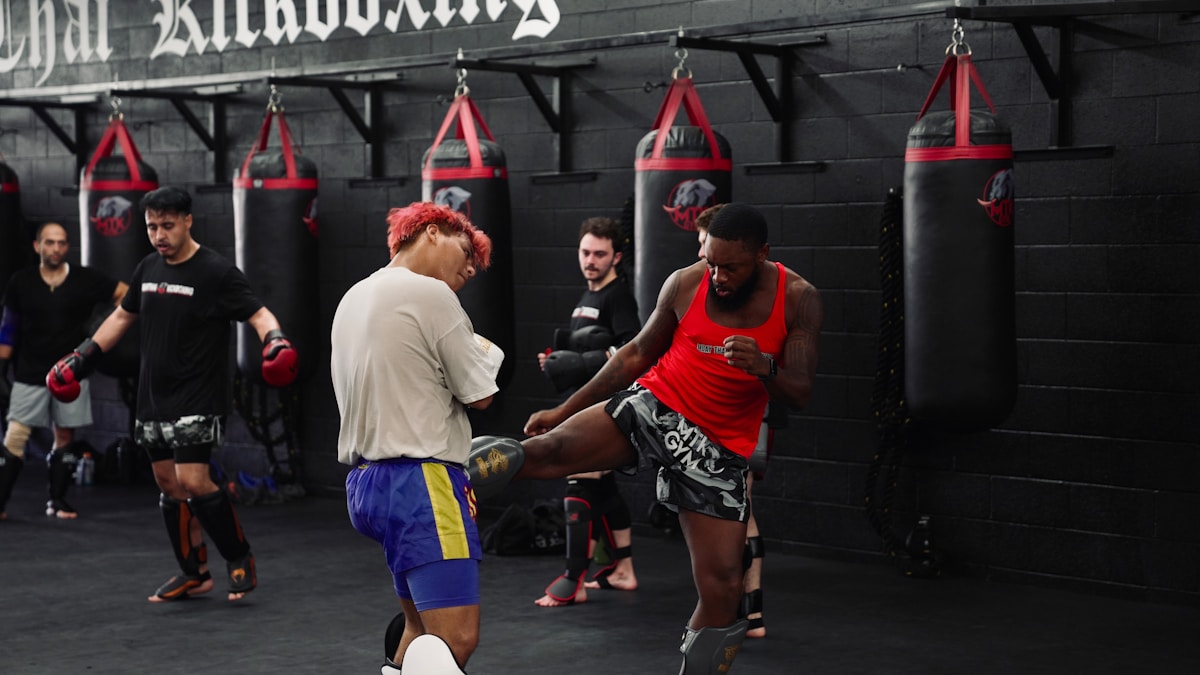
- Pad work or bag work (20–30 minutes): This is the core of the class. You will partner up and hit focus mitts, or work the heavy bag in rounds. The coach walks around correcting form and pushing you to keep your hands up.
- Conditioning (5–10 minutes): Burpees, squats, plank holds, or ab work to finish strong.
- Cool-down (5 minutes): Static stretching to prevent soreness.
Total class time is typically 45–60 minutes. Nobody will force you to do anything you are uncomfortable with — if a drill feels too advanced, you can modify or sit out. Most gyms have a culture of encouragement, not intimidation.
What to Bring and Wear to Kickboxing
You do not need to invest in expensive gear for your first class. Most gyms loan or rent hand wraps and gloves for beginners. Here is what you actually need:
- Athletic clothes: A moisture-wicking t-shirt or tank top, and shorts or leggings that allow full range of motion. Avoid anything too baggy — it can catch on equipment.
- Clean indoor training shoes: Wrestling shoes, cross-trainers, or bare feet (many gyms require bare feet on the mats). Never wear outdoor shoes onto a training floor.
- Hand wraps: These protect your knuckles and wrists inside the gloves. The gym can show you how to wrap — it takes two minutes once you learn.
- Boxing gloves (10–16 oz): Beginners usually use 12–14 oz gloves. If the gym does not provide loaners, you can buy a basic pair for $30–$50.
- Water bottle and towel: You will sweat — a lot. Stay hydrated between rounds.
Do not buy expensive gear before your first class. Wait until you know you love it, then invest in quality gloves and wraps. Many Texas kickboxing gyms offer a free or discounted first class — check our kickboxing gym directory to find one near you.
Kickboxing Tips for Your First Week
Your first week sets the tone for your entire kickboxing journey. Here are the tips that separate people who stick with it from people who quit after two classes:
- Focus on technique, not power. A perfect jab at 50% effort teaches you more than a sloppy cross thrown at 100%. The power comes naturally once your form is correct.
- Pace yourself. You will be tempted to go all-out in round one and gas out by round three. Breathe through your nose, relax between combinations, and conserve energy.
- Keep your hands up. This is the #1 mistake beginners make. Always return your gloves to your face after throwing a punch. It protects you in sparring and builds muscle memory.
- Ask questions. Coaches love engaged beginners. If you do not understand a technique, ask. That is what they are there for.
- Go 2–3 times per week. Once a week is not enough to build momentum. Twice a week lets your body adapt. Three times is the sweet spot for rapid improvement.
- Expect soreness. Your shoulders, calves, and core will ache after the first few classes. This is normal — it means your body is adapting. Stretch, hydrate, and do not skip the next class.
How Much Does Kickboxing Cost in Texas?
Kickboxing gym pricing in Texas varies by location and class type. In major cities like Austin, Dallas, and Houston, expect to pay $100–$180 per month for unlimited classes at a dedicated kickboxing or MMA gym. Smaller cities and suburban gyms typically run $80–$130 per month. Most gyms offer a drop-in rate of $15–$25 per class, and many provide a free trial class for first-timers.
Some gyms offer fitness-oriented kickboxing (like cardio kickboxing or 9Round style circuit training) which tends to be cheaper at $60–$100 per month. These are great for fitness but do not teach real technique. If your goal is to learn actual kickboxing skills — combinations, footwork, defense — look for a gym that teaches pad work and technique drills, not just bag circuits. For a detailed breakdown, see our guide on martial arts training costs in Texas.
Conclusion: Your First Kickboxing Class Starts Today
Kickboxing is one of the best decisions you can make for your fitness, confidence, and mental health. You do not need to be athletic, experienced, or tough to start — you just need to show up. Remember: bring water and a towel, wear comfortable athletic clothes, and do not stress about the gear. The gym will take care of the rest. Focus on technique, pace yourself, and ask questions. Within a few weeks, you will feel stronger, more coordinated, and hooked on the sport.
Ready to find a gym? CombatTX lists kickboxing gyms across Texas — from Dallas and Houston to Austin and San Antonio. Browse our directory, compare schools, and book a free intro class today.
Frequently Asked Questions
Do I need to be in shape before starting kickboxing?
No. Kickboxing classes are designed to get you in shape, not require you to already be there. Beginner classes move at a moderate pace and instructors encourage you to rest when needed. Most people see significant fitness improvements within 4–6 weeks of training 2–3 times per week.
Is kickboxing good for self-defense?
Yes, kickboxing teaches practical striking skills — punches, kicks, footwork, and distance management — that are highly effective for self-defense. The techniques work at real combat ranges, and the conditioning builds the fitness and mental toughness needed under pressure. For dedicated self-defense training, look for gyms that also incorporate sparring at controlled intensity.
What should I wear to my first kickboxing class in Texas?
Wear a moisture-wicking shirt, athletic shorts or leggings, and clean indoor training shoes or plan to train barefoot. Most Texas gyms provide loaner gloves and hand wraps for beginners — just bring water, a towel, and a positive attitude. Avoid jewelry and loose clothing that could snag on equipment.
Related Guides
- 5 Boxing Training Tips for Beginners
- What to Expect at Your First BJJ Class
- How Much Does Martial Arts Training Cost in Texas
- The Benefits of Muay Thai for Fitness
- How to Choose Your First MMA Gym in Texas
- Boxing vs Muay Thai: Which Is Right for You?
- What to Wear to Your First BJJ Class
- Browse Kickboxing Gyms in Texas