
If you have watched a Muay Thai fight, you have seen it: two fighters locked collar to collar, battling for head position while short knees slam into ribs. That is the clinch — and it is the phase of Muay Thai that most beginners in Texas meet last, long after their first jab and roundhouse. The Muay Thai clinch is a standing grappling position where you control your opponent’s neck, arms, and posture to set up knees, elbows, and sweeps while staying on your feet.
Punches and kicks get the highlight reels, but experienced fighters know the clinch often decides who actually wins. In traditional Muay Thai scoring, dominant clinch work with clean knees is rewarded heavily — a fighter who cannot defend the double collar tie gets worn down round after round. The good news: you do not need years of training to start building solid clinch fundamentals. In this guide, you will learn what the clinch is, how to establish a correct grip, your first offensive and defensive options, beginner-safe drills, and the mistakes that stall most new students. We will finish with where to find Muay Thai gyms across Texas so you can practice these skills with real partners.
What Is the Muay Thai Clinch and Why It Matters
The clinch is Muay Thai’s answer to close-range grappling. Instead of exchanging at kicking range, you step into your opponent, secure grips on the neck or arms, and take control of their posture and balance. From there you can deliver knees to the body and legs, elbows at close range, and off-balancing sweeps that dump an opponent to the canvas without ever following them down.
The signature position is the double collar tie, commonly called “the plum.” Both of your hands lock behind the opponent’s head, your forearms press down along their collarbones, and you pull their head off their centerline. Executed correctly, it is one of the most dominant positions in all of stand-up fighting. Three reasons the clinch deserves your attention:
- Fight results: in traditional Muay Thai, aggressive clinch dominance with effective knees scores heavily with judges.
- Self defense: knowing how to control, posture, and disengage at grappling range matters when someone closes the distance on you.
- Well-roundedness: a kicker who freezes in the clinch gets punished there. Training both sides of the game makes you complete.
Because clinch skill is built through feel and resistance, it is nearly impossible to develop alone. That is why choosing a gym that actually drills the clinch matters — you can browse Muay Thai gyms in Texas on CombatTX and ask each one how early clinch work is introduced.
Muay Thai Clinch Fundamentals: Grip, Position, and Posture
Before throwing a single knee, build your control. Clinch dominance layers on a handful of mechanical details:
- Hand placement: cup the crown of the head, fingers tight, thumbs near the temple. Never interlace your fingers — one wrenching twist can injure them.
- Elbows pinched: draw your elbows toward each other and sink them toward the collarbones. Wide elbows hand your opponent space to escape.
- Forearm pressure: both forearms ride the collarbone line so the head follows your arms.
- Break the posture: pull the head down and slightly to one side, which loads your knees and unloads theirs.
- Hips connected: keep your hips close and slightly forward so you can drive, not just pull.
One concept rules everything else: inside position. Whoever gets both arms inside the opponent’s arms controls the exchange. Much of clinch fighting is a quiet battle for that inside real estate, won through a skill called pummeling — swimming your arms back inside, one at a time, whenever the opponent crosses over you.
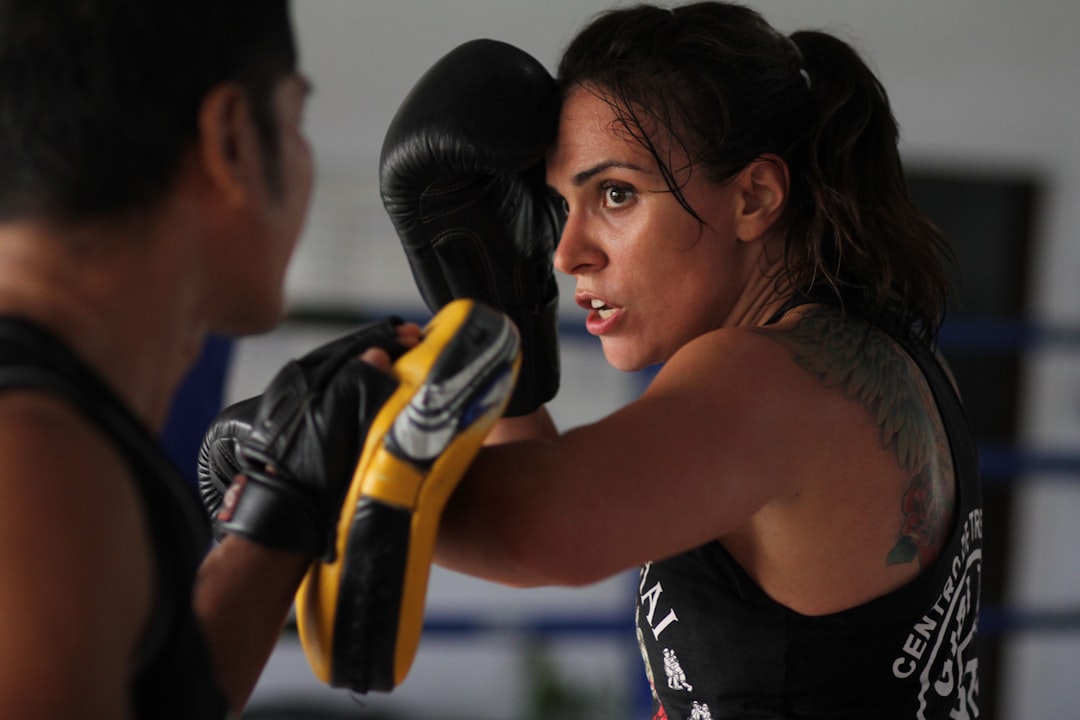
Offense and Defense Inside the Muay Thai Clinch
Once you hold the double collar tie, your primary weapons are:
- Straight knee: drive the knee up the middle toward the belly or ribs, thrusting the hips forward as you pull the head down into the strike.
- Curving knee: arc the knee around the elbow line into the ribs or liver on the same side as your controlling arm.
- Short elbows: from the collar tie, pull the head into the path of a horizontal or downward elbow.
- Sweeps and dumps: step behind the lead leg or pull across your hip at the exact moment they step, using their momentum.
Defense is mostly about position, not power:
- Pummel back to inside position the instant an arm crosses over yours.
- Keep your posture — head up, chin tucked, neck strong. Broken posture is what makes knees land.
- Frame and turn: an arm frame across their chest plus a quarter turn breaks their grip angle.
- Drop your hips and step back to disengage when you are losing the exchange. Reset rather than absorb knees.
Beginner Clinch Drills and the Mistakes That Stall Progress
You build clinch feel through repetition, not theory. These drills are standard in most solid Muay Thai programs:
- Pummel drill: both partners hold neck ties and take turns swimming to inside position, slow and relaxed, for three-minute rounds.
- 50/50 knees: both partners clinch and trade light straight knees, focusing on posture breaks rather than power.
- Collar tie bag work: practice pulling an imaginary head down into position as you knee a heavy bag.
- Clinch-only rounds: at light intensity, start every round in the clinch and restart when someone wins position.
And the mistakes that hold most beginners back:
- Interlacing the fingers (an injury waiting to happen)
- Pulling with straight arms instead of bent, connected elbows
- Staring at the floor instead of keeping the head up
- Squared, flat hips with no forward pressure
- Clenching a static grip instead of constantly off-balancing
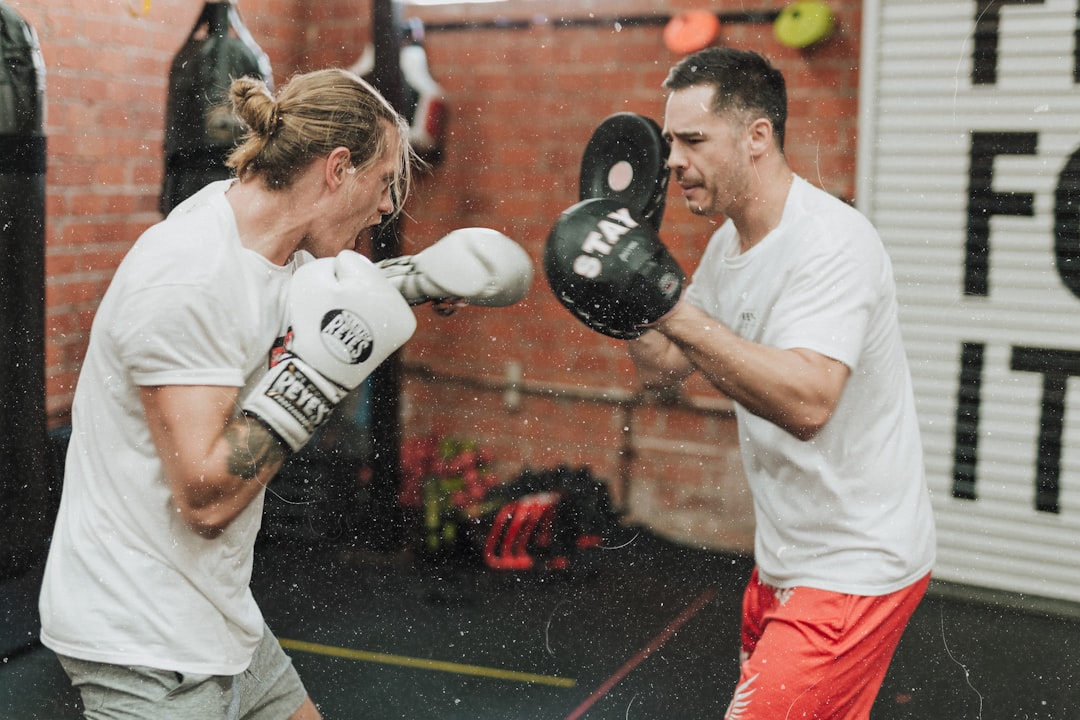
Where to Practice Clinch Work in Texas
Three takeaways: the clinch is controlled by grip and inside position, not strength; knees and sweeps only work off a broken posture; and clinch defense is a skill you drill, not a reflex you hope for. None of it develops without a partner, so the fastest path is a gym that clinches from early on. CombatTX lists Muay Thai gyms across Texas, plus city guides for Houston, Dallas, and Austin. Compare programs, ask about clinch rounds, and take a trial class before committing. And if you own a gym, list it on CombatTX to reach students searching for exactly this kind of training.
Frequently Asked Questions About the Muay Thai Clinch
Q: Is the clinch allowed in kickboxing?
A: Only briefly. Most kickboxing and K-1 rulesets break fighters apart within seconds and prohibit elbows and extended knee work from the collar tie. Full clinch fighting with knees, elbows, and sweeps is a defining feature of Muay Thai — it is the biggest rule difference between the two sports.
Q: How long does it take to learn the clinch?
A: You can learn a correct collar tie and your first knees within a few weeks of dedicated drilling. Feeling comfortable pummeling and defending knees under pressure typically takes six months to a year of regular clinch rounds with resisting partners.
Q: Do you need to be strong to win in the clinch?
A: Strength helps, but technique dominates. Grip placement, inside position, posture breaks, and off-balancing create leverage that outperforms raw pulling power — which is why smaller, technical Thai fighters routinely control much larger opponents.
Related Guides
- Muay Thai Gyms in Texas — every Muay Thai gym listing on CombatTX
- Houston Combat Sports Directory — gyms across every discipline
- Dallas Combat Sports Directory — where to train in DFW
- Austin Combat Sports Directory — top training spots in Austin
- Boxing Gyms in Texas — sharpen your hands between clinch rounds
- The CombatTX Blog — training guides for every discipline
Comments