
Brazilian Jiu-Jitsu is one of the most effective martial arts in the world, and its submissions are the reason why. Whether you’re training at a gym in Houston, Austin, or anywhere else in Texas, the fundamentals of BJJ submissions remain the same. As a beginner, mastering a small set of high-percentage submissions will dramatically accelerate your progress on the mats. Rather than trying to learn dozens of techniques at once, focusing on these five essential BJJ submissions gives you a solid foundation that you’ll use throughout your entire grappling journey. Each of these submissions appears constantly in sparring, competition, and real-world self-defense situations, making them invaluable tools for any white belt.
1. The Armbar (Straight Armlock)
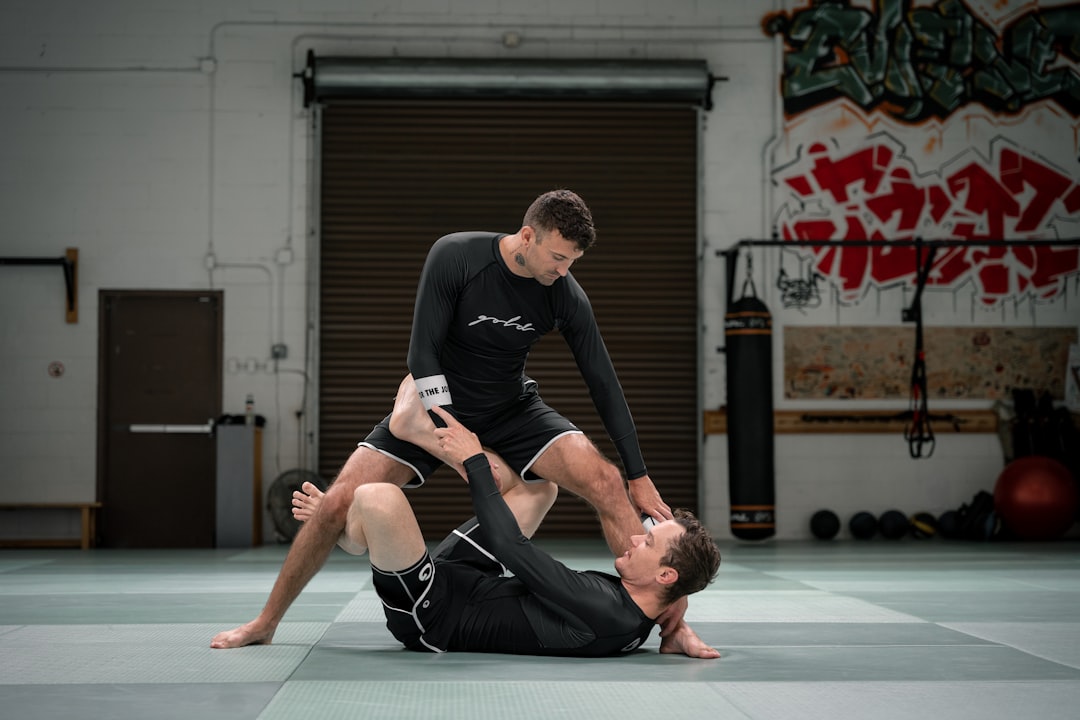
The armbar is arguably the most fundamental submission in all of BJJ. It works by isolating your opponent’s arm and applying pressure against the elbow joint, forcing a tap or risking serious injury. The classic armbar from closed guard teaches you how to control an opponent’s posture, pivot your hips, and break grips — skills that transfer to virtually every other position in jiu-jitsu.
The key details for a tight armbar include keeping your knees pinched together, controlling the wrist (not the forearm), and keeping your hips close to your opponent’s shoulder. A common mistake beginners make is reaching for the armbar too early without establishing proper control. Instead, focus on breaking your opponent’s posture first, then securing the position before attacking the joint. Many of the top BJJ gyms in Texas teach the armbar on day one because it develops hip mobility and positional awareness that underpins your entire grappling game.
2. The Triangle Choke
The triangle choke is a blood choke that uses your legs to compress your opponent’s carotid arteries, cutting off blood flow to the brain. It’s typically applied from the guard position and is one of the highest-percentage submissions in both competition and self-defense. The triangle teaches the critical concept of creating angles — you’re not trying to overpower someone with your legs, but rather positioning yourself so that your thigh and your opponent’s own arm work together to cut off circulation.
To finish the triangle, pull your opponent’s head down, underhook their leg to prevent posturing up, and squeeze your knees together. If the triangle isn’t tight enough, adjust your angle by pulling on their arm and rotating your hips perpendicular to their body. The triangle choke pairs beautifully with the armbar, as your opponent’s defense to one often opens up the other. This combination, often called the armbar-triangle game, is a cornerstone of modern BJJ strategy and is drilled extensively at BJJ academies across Texas.
3. The Rear Naked Choke (RNC)
The rear naked choke is widely considered the most effective submission in all of martial arts. Applied from the back-control position, it compresses both carotid arteries simultaneously, typically rendering an opponent unconscious in under 10 seconds. Unlike joint locks that rely on pain compliance, a properly applied RNC simply cannot be resisted — no matter how strong your opponent is.
Success with the RNC depends entirely on maintaining back control. Before even attempting the choke, you need to establish your hooks (your legs inside theirs), secure a seatbelt grip (one arm under their chin, the other over their shoulder), and keep your chest pressed tight against their back. Once you have these control elements in place, slide your choking arm under their chin, grab the bicep of your opposite arm, and place that hand behind their head. Squeeze your elbows together while expanding your chest. If you’re training BJJ in Dallas, San Antonio, or Houston, your instructors will emphasize that back control and the rear naked choke are among the highest-scoring positions in competition.
4. The Kimura
The Kimura is a shoulder lock that works by isolating your opponent’s arm and applying rotational pressure to the shoulder joint. Named after the legendary judoka Masahiko Kimura, who used it to defeat Helio Gracie in 1951, this submission is incredibly versatile — it can be applied from side control, half guard, closed guard, and even from the bottom position as a sweep setup.
The grip for the Kimura involves grabbing your own wrist around your opponent’s arm in a figure-four configuration. Once locked in, you create leverage by raising their elbow and pulling their wrist toward the back of their head. Beginners should focus on isolating the arm against their own body before attempting to finish, as an opponent with a free arm can easily defend. The Kimura is particularly valuable for smaller practitioners because it relies on leverage and grip strength rather than raw power, which is why it’s taught early at grappling schools throughout Texas.
5. The Guillotine Choke
The guillotine choke rounds out our list because it’s one of the most practical submissions for both sport and self-defense. Applied when your opponent’s head is positioned below your chest — such as during a sloppy takedown attempt or when they posture forward in your guard — the guillotine uses a closed guard or arm-in variation to compress the trachea and carotid arteries.
For beginners, the arm-in guillotine (also known as the Marcelotine after Marcelo Garcia) is often the best starting point because it doesn’t require as much arm flexibility. The setup is simple: when your opponent shoots for a takedown with their head on one side, wrap your arm around their neck, grab your own wrist, and fall back into closed guard. Finish by squeezing your elbows together and arching your hips upward. The guillotine is especially useful for practitioners who also train MMA, as it counters the wrestling shots that are common in mixed competition.
Conclusion
Mastering these five essential BJJ submissions — the armbar, triangle choke, rear naked choke, Kimura, and guillotine — will give you a powerful foundation that covers joint locks, blood chokes, and air chokes from multiple positions. Remember that reps are everything in jiu-jitsu: drill each submission hundreds of times until the mechanics become muscle memory. Focus on one or two at a time during live sparring at your local Texas BJJ gym, and resist the temptation to chase flashy techniques before your fundamentals are solid. Ready to start training? Browse our directory of BJJ schools in Texas and find a gym near you today.
Frequently Asked Questions
What is the easiest BJJ submission for beginners to learn?
The armbar from closed guard is typically the easiest submission for BJJ beginners to learn because it teaches fundamental hip movement and grip fighting in a relatively safe, controlled position. Most BJJ schools in Texas introduce the armbar in the first few weeks of training.
How long does it take to get good at BJJ submissions?
Most practitioners can apply basic submissions like the armbar and rear naked choke competently within 3 to 6 months of consistent training, but mastering the setups, transitions, and counters takes years. Blue belt, which typically takes 1 to 2 years, is when your submission game starts to become reliable against resisting opponents.
Are BJJ submissions effective for self-defense?
Yes, BJJ submissions are highly effective for self-defense. Chokes like the rear naked choke and guillotine can neutralize a larger attacker in seconds. However, always train self-defense-specific scenarios with your instructor, as sport BJJ and self-defense BJJ have important differences in strategy and awareness.
Comments