
If you have ever rolled with a stronger partner, ended up stuck on your back, and wondered what you are actually supposed to do from there — the answer is one of the fundamental BJJ sweeps. Sweeps are the great equalizers of Brazilian Jiu-Jitsu: they let a smaller, lighter person use leverage, angles, and timing to flip an opponent over and come up on top. For white belts, learning to sweep from guard is one of the fastest ways to go from merely surviving rolls to actually playing the game. Whether you train at a gym in Houston, Austin, or anywhere else in Texas, the mechanics are identical — and the five sweeps below form the core curriculum that almost every academy teaches in the first year. Master these five BJJ sweeps and you will stop dreading the bottom position and start hunting for it.
Why BJJ Sweeps Matter for White Belts
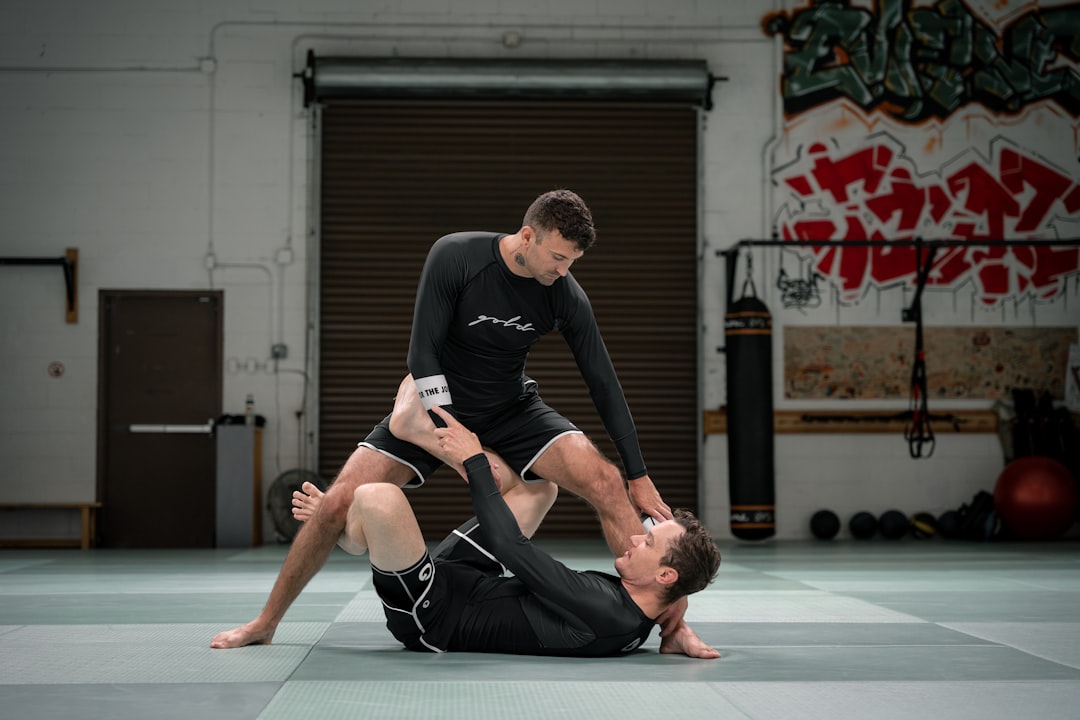
A sweep is a technique that reverses the position from your guard: you start underneath, your opponent ends up on their back, and you rise up on top — often straight into mount. In sport jiu-jitsu a clean sweep scores two points, but the real value is much bigger than the scoreboard. Sweeping teaches you that the guard is not a defensive shell; it is an offensive platform. Once that clicks, everything about jiu-jitsu changes: you stop panicking when you get taken down and start attacking from the moment your back touches the mat.
Sweeps also build the two skills that separate white belts who improve quickly from those who stagnate: grip fighting and off-balancing. Every sweep in this article depends on winning a grip first, then breaking your opponent’s base at the exact moment their weight shifts. Those concepts — control the arms, move the hips, attack the balance — carry over into guard passing, takedowns, and even self-defense. The sweeps below are ordered roughly in the sequence most Texas academies introduce them, so you can benchmark where you are in your own development.
1. The Scissor Sweep
The scissor sweep is almost always the first sweep a white belt learns, and for good reason: it demonstrates the push-pull principle better than any other technique. From closed guard, open your legs and establish a cross collar grip with one hand and a same-side sleeve grip with the other. Pull your knees to your chest to force your opponent’s weight forward, then place one shin across their belly while your other leg plants on the mat. As their weight tips forward, chop your bottom leg through their knee while pulling hard with your collar grip — they rotate over your shin like a hinge, and you follow straight into mount.
The detail that makes or breaks the scissor sweep is timing. It fails when the opponent’s weight is sitting back on their heels. Wait for the moment they post their hands or drive their weight into you, then sweep. Strength is almost irrelevant — a 120-pound white belt can scissor-sweep a 250-pound training partner who is tilted forward.
2. The Hip Bump Sweep
The hip bump punishes an opponent who sits back inside your guard with an upright posture and their hands off your body. Open your guard, sit up explosively toward them, and overhook the arm on the side you intend to sweep. Plant your posting hand on the mat behind you, lift your hips off the floor, and rotate over your shoulder, driving your chest into theirs. Because their arms are doing nothing, they have no post to stop the momentum, and you land on top in mount.

The hip bump also introduces white belts to the idea of combination attacks. If your opponent defends by posting their free hand on the mat, their extended arm is exposed — that is the classic entry to the kimura from guard. Threaten the sweep and the submission together and you will catch training partners with one or the other constantly.
3. The Flower Sweep
The flower sweep is the best closed-guard answer to opponents who stay heavy and low on top of you. From closed guard, cross-grip one sleeve and reach over their back to grab the same-side pants at the knee. Uncross your legs, angle your hips out to the gripped side, and slide your shin across their lower belly. Load their entire body onto your leg by lifting with the pant grip, then roll them over your body as you swing — they fall gently to the mat while you come up in a dominant position.
Because the flower sweep loads your opponent onto your legs rather than fighting their base directly, it works remarkably well against bigger, heavier training partners. It does demand more coordination than the scissor or hip bump, so expect a few weeks of clumsy attempts before it clicks during live rolling.
4. The Elevator (Tripod) Sweep
Sooner or later every training partner learns to stand up in your guard to break your legs open. That is when the elevator sweep, also called the tripod sweep, comes into play. As they stand, keep a sleeve and collar grip, plant one foot on their hip, and hook your other foot behind their ankle. Pull them forward with your grips so they have to post one leg out for balance — then lift the hooked leg with your foot while pulling them backward over it. Their base vanishes and you rise into an open guard on top.
The elevator sweep teaches white belts how to manage distance against a standing opponent, a skill you will need the moment you start rolling with higher belts who refuse to stay inside your closed guard. Drill it every time a partner stands in your guard, even in drills where the sweep is not the goal.
5. The Pendulum Sweep
The pendulum sweep, sometimes called the flower-sweep cousin from open guard, relies on momentum instead of lifting. From closed guard, grab a deep cross collar grip and an underhook on the same-side arm. Open your guard, swing your outside leg down and back like a pendulum to generate force, and chop your inside leg across their thighs as you turn toward the gripped side. The swinging motion dumps them over while your grips steer the landing — and once again you follow into mount.
What makes the pendulum sweep special for white belts is how naturally it chains with the armbar from guard. If your opponent yanks the threatened arm back to defend the sweep, their elbow drifts across your body — which is the armbar. This sweep-plus-submission pairing is one of the first real combinations most students learn, and it doubles the threat of your guard.
How to Drill BJJ Sweeps the Right Way
Knowing five sweeps and landing five sweeps in rolling are very different things. The bridge between them is structured drilling. Most coaches at Brazilian Jiu-Jitsu academies across Texas — from Houston to Dallas — recommend a simple three-layer approach for white belts:
- Solo movement first. Practice the hip motions — hip escapes, sit-ups to technical stand-up, leg swings — before adding a partner. Ten minutes before class is enough.
- Cooperative reps with feedback. Do ten repetitions per side of each sweep with a partner who gives honest, gradually increasing resistance. Quality beats volume: five technically correct reps beat fifty sloppy ones.
- Positional sparring. Start every round in closed guard with one goal only: sweep or be passed. This isolates the exact skill and forces you to chain grips, off-balances, and attempts under pressure.
Film one rolling round per week if your gym allows it. White belts who review footage spot their own mistakes — a missed angle, a grip never established — far faster than those who rely on feel alone.
Common Sweep Mistakes White Belts Make
Watch any white belt class and the same errors appear in nearly every failed sweep attempt:
- Sweeping before winning the grips. No sleeve or collar control means your opponent simply posts a hand and rebalances.
- Skipping the angle. Sweeps work when your hips are offset from theirs; straight-on attempts turn into muscle contests.
- Ignoring off-balancing. Attack when their weight shifts — forward for scissor and pendulum, backward for elevator — not whenever you remember the technique.
- Not following to the top. A sweep that ends with you still lying on the mat scores nothing and loses the position. Come up to mount immediately.
Conclusion: Build Your Game from the Bottom
Three takeaways: first, the guard is an attacking position, and these five BJJ sweeps — scissor, hip bump, flower, elevator, and pendulum — are its foundation. Second, every sweep depends on grips, angles, and timing rather than strength, which is exactly why jiu-jitsu works for everyone. Third, structured drilling, not random rolling, is what turns techniques into habits. If you are looking for a place to put these sweeps to work, browse the BJJ gyms in our Texas directory or explore city guides for San Antonio and beyond — then get on the mat and start sweeping.
Frequently Asked Questions
What is the easiest BJJ sweep for a beginner?
The scissor sweep is usually the easiest because it uses a simple push-pull mechanic with no lifting or momentum swing. Most Texas academies teach it in the first two to three months of training, and it works at full resistance once the timing is understood.
How long does it take to hit sweeps in live rolling?
Most consistent white belts land their first sweeps against resisting partners within three to six months of training two to three times per week. The turning point is usually learning to off-balance first and sweep second, rather than attempting the technique cold.
Do BJJ sweeps work against bigger, stronger partners?
Yes — sweeps are leverage-based, which is why they are central to safe, effective training for smaller practitioners. The flower and elevator sweeps in particular are designed to move an opponent’s weight with your legs, the strongest muscles in your body, rather than your arms.
Comments