
If you live in Texas and want to learn to grapple, you will eventually run into the wrestling vs BJJ question. Texas is one of the best places in the country to answer it. High school and club wrestling runs deep in the Dallas-Fort Worth area, while Brazilian Jiu-Jitsu has exploded across Houston, Austin, and San Antonio, with new academies opening every year. Both arts teach you to control a fully resisting opponent, and both build the kind of functional fitness that ordinary gym workouts cannot match. But they develop very different skill sets, and the right choice depends on your age, your goals, and what you want your training to feel like day to day. In this guide, we break down what each art actually teaches, how they compare for fitness, self defense, and MMA, and how to decide which one deserves a spot in your weekly schedule.

Wrestling vs BJJ: What Each Art Actually Teaches
At first glance, wrestling and BJJ look similar because both are grappling arts with no striking. The real difference is what happens after contact. Wrestling is built around taking an opponent down to the mat and controlling them from the top. A wrestling match is decided by takedowns, escapes, and pinning, so training revolves around explosive entries, hand fighting, and relentless top pressure.
BJJ starts where wrestling scoring usually ends: on the ground. Jiu-jitsu teaches an entire guard system for fighting off your back, sweeping opponents over, and finishing fights with joint locks and chokes. Both arts share core skills — head position, gripping, hip movement, balance — but a wrestler’s practice and a jiu-jitsu practitioner’s practice produce very different grapplers. If you are comparing options, you can browse wrestling gyms across Texas and jujitsu schools in your city side by side in the CombatTX directory.
The Case for Wrestling: Takedowns and Conditioning
Wrestling is widely considered the most physically demanding combat sport in the world. Practices are famous for live drilling, nonstop pace, and conditioning circuits that leave even fit adults completely spent. Here is what a wrestling room gives you that almost nothing else can:
- Elite takedowns. Single and double leg takedowns, body locks, and throws — the skills that decide where a real encounter takes place.
- Top control. Once a wrestler puts you on your back, staying there is a full-time job. That riding pressure translates directly to MMA and self defense.
- Grappling conditioning. Wrestling builds explosive power and a gas tank that shocks people who thought they were in shape.
- Mental toughness. Wrestling practice is uncomfortable by design, and that discomfort rewires how you handle pressure everywhere else in life.
Texas has a serious wrestling pipeline. UIL high school wrestling keeps growing, and club programs across the Dallas-Fort Worth area, Houston, and Austin feed wrestlers into college programs and MMA gyms every year. For kids, wrestling is one of the most accessible entry points into combat sports — but pure adult beginner wrestling classes are rarer, which is why many adults find wrestling through MMA gyms.
The Case for BJJ: Submissions and the Long Game
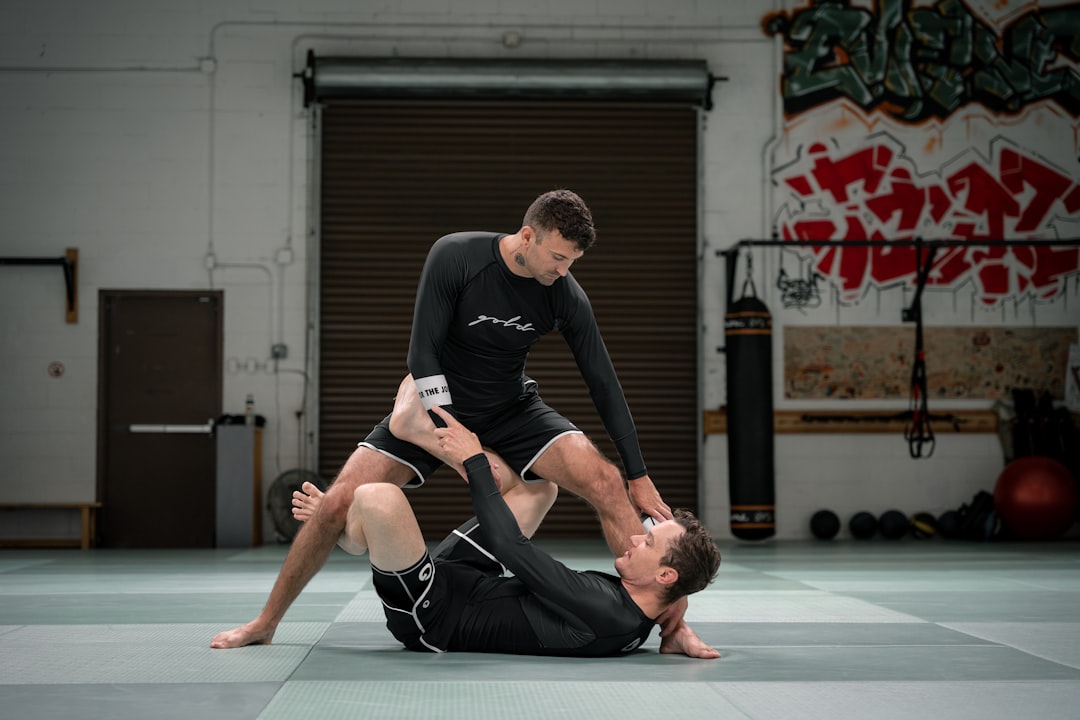
BJJ’s biggest selling point is that you can train it at nearly full resistance, safely, from your very first month. Because there is no punching and every training round ends with a tap instead of an injury, jiu-jitsu lets you test techniques against a real opponent every single session. That makes skill development fast and honest.
Where wrestling rewards explosion, BJJ rewards problem-solving. You learn a positional hierarchy — guard, side control, mount, back control — and a growing arsenal of sweeps and submissions at each stage. The belt system gives beginners a clear long-term path, and because intensity is self-regulated, adults routinely start BJJ in their 30s, 40s, and beyond and still reach black belt. For self defense, jiu-jitsu teaches you to close distance, control a bigger attacker, and end an encounter with a submission or dominant position rather than strikes. To see how academies differ, compare jujitsu schools near you and read what each gym emphasizes.
Wrestling vs BJJ for Fitness, Self Defense, and MMA
Fitness: Both arts burn serious calories and build strength that shows up in real life. Wrestling practices are shorter and more explosive — expect brutal conditioning circuits and neck grip strength you never knew existed. BJJ rounds are longer and more aerobic, closer to a chess match with your whole body. If you want the hardest possible workout, wrestling wins. If you want fitness you can sustain for decades, BJJ is the safer bet.
Self defense: Wrestling decides where an encounter happens — a trained wrestler can take an aggressor down or stay on their feet and escape. BJJ decides how it ends — control, a dominant position, or a fight-ending choke. The honest answer is that they cover each other’s gaps, which is why police academies and military combatives programs borrow from both.
MMA: If you dream of fighting or just want well-rounded skills, you eventually need both. Wrestlers famously control where the fight takes place, and jiu-jitsu finishes fights once it gets there. Most martial arts gyms in Texas that teach MMA include both wrestling takedowns and BJJ groundwork in their curriculum.
How to Choose Between Wrestling and BJJ
Use these quick rules of thumb, then visit gyms in person before committing:
- Choose wrestling if you are young, want maximum conditioning, love competing, or plan to wrestle for your school.
- Choose BJJ if you are an adult beginner, want a long-term hobby with a belt progression, or care most about self defense skills you can train realistically.
- Train both if MMA is the goal — the combination is the backbone of modern mixed martial arts.
Where you live matters too. Wrestling clubs cluster around school districts in the DFW area, while BJJ academies are everywhere. Start with our city guides for Houston, Dallas, and Austin to see what is training near you, or browse the full directory on the CombatTX blog home page.
The Bottom Line
Wrestling builds takedowns, top control, and a level of conditioning nothing else matches. BJJ builds a ground game, a submission arsenal, and a practice you can sustain for decades. One is not better — they are two halves of grappling. Visit gyms from both arts, take the free trial classes almost every Texas gym offers, and pick the room you will actually walk into three times a week. That gym is the right one. When you are ready to compare programs, pricing, and locations, CombatTX lists wrestling gyms, jujitsu schools, and MMA academies across every major Texas city.
Wrestling vs BJJ: Frequently Asked Questions
Q: Is wrestling or BJJ better for a complete beginner?
A: For adults, BJJ is usually the easier entry — most academies run structured beginner programs and pace is self-regulated. Pure beginner wrestling classes for adults exist but are more often found inside MMA gyms. Kids can start either art and thrive.
Q: Which is better for self defense, wrestling or BJJ?
A: Wrestling controls where an encounter goes — to the ground, or back to your feet. BJJ controls how it ends — with position, control, or a submission. For pure self defense coverage, the two arts complement each other almost perfectly.
Q: Can you train both wrestling and BJJ at the same time?
A: Yes, and many Texas grapplers do. Wrestling takedowns fill BJJ’s biggest weakness, and BJJ ground skills complete wrestling. Expect a tough first month of conditioning while your body adapts to both.
Comments