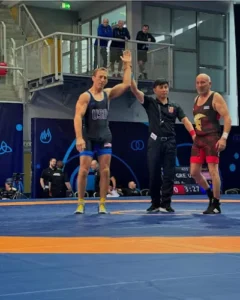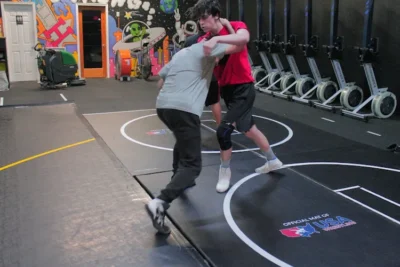
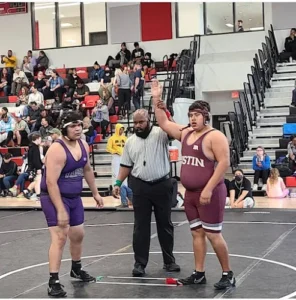




Find wrestling schools and clubs in Texas through CombatTX. Our directory lists over 40 wrestling training facilities across the state, covering folkstyle wrestling, freestyle wrestling, and Greco-Roman disciplines. Texas has a deep wrestling tradition, with the University Interscholastic League (UIL) sanctioning high school wrestling programs at over 500 schools statewide.
What are the main types of wrestling? Folkstyle (scholastic) wrestling is the style practiced in American high schools and colleges. Freestyle wrestling is an Olympic sport that allows attacks on both the upper and lower body with an emphasis on exposure (turning the opponent’s back to the mat). Greco-Roman wrestling, also an Olympic sport, forbids holds below the waist and emphasizes throws and upper-body technique.
Wrestling is widely considered one of the best foundational martial arts for mixed martial arts (MMA). According to a 2024 analysis of UFC champions, over 40% had a wrestling background, more than any other single martial art. Wrestling develops exceptional cardiovascular conditioning, balance, body control, mental toughness, and the ability to dictate where a fight takes place (standing or on the ground).
When choosing a wrestling school, consider the coaches’ competitive credentials, whether the program serves youth, high school, or adult athletes, the training schedule and intensity level, and opportunities for competition. Many Texas wrestling clubs offer off-season training for scholastic wrestlers and beginner-friendly programs for adults looking to learn the sport.
Search our directory to find wrestling programs near you in Texas.
Children can start wrestling as young as 4-5 years old in youth wrestling programs. Texas has a strong wrestling culture with UIL high school wrestling programs across the state. Most wrestling clubs accept beginners at any age and group athletes by weight and experience level.
Wrestling is excellent for self-defense because it teaches takedowns, ground control, and how to dominate physical confrontations without striking. Wrestlers learn to control opponents through leverage and positioning, skills that transfer directly to real-world self-defense situations. Many MMA champions have wrestling backgrounds.
Youth wrestling clubs in Texas typically charge $50-$150 per month, with seasonal programs available for $200-$500 per season. High school wrestling is free through UIL programs. Adult wrestling clubs are less common but usually cost $75-$125 per month.