
If you train Muay Thai in Texas, the roundhouse kick is the technique you will use more than almost any other. It is the signature strike of the art, the one that separates a weekend hobbyist from a real nak muay. Yet most beginners throw it wrong, relying on leg strength instead of the full-body mechanics that make the kick devastating. The Muay Thai roundhouse is not a karate-style snap kick. It is a whip-like, hip-driven motion that can sweep through an opponent’s guard and finish fights. In this breakdown, you will learn every phase of the roundhouse, from stance to follow-through, plus the most common mistakes to avoid.
Tools for Kick Training
CombatTX is reader-supported. When you buy through links on our site, we may earn an affiliate commission at no extra cost to you. As an Amazon Associate, CombatTX earns from qualifying purchases.


The Mechanics of a Muay Thai Roundhouse
The Muay Thai roundhouse is fundamentally different from other martial arts kicks because it swings through the target rather than snapping back. Think of it as swinging a baseball bat, where your shin is the thick end of the bat and your hip is the pivot point. The power comes from the rotation of your entire body, not from the leg alone.
Here is the step-by-step breakdown of the technique:
- Step 1: Stance and weight transfer. Start in your fighting stance with your lead foot pointed slightly outward at about 45 degrees. When you initiate the kick, shift your weight onto your support leg (the rear leg if kicking with the lead, or the lead leg if kicking with the rear).
- Step 2: Plant the support foot. Turn the toes of your support foot outward, away from the target. This opens your hips and allows the rotation that generates power. If your support foot stays pointing forward, your hip will lock and the kick will be weak.
- Step 3: Swing the kicking arm. As you throw the kick, swing the arm on the same side as your kicking leg downward and backward. This counter-rotation adds torque and keeps you balanced. The opposite arm stays up to guard your face.
- Step 4: Rotate the hip fully. Drive your hip forward and over, not just around. Your hip should lead the kick, pulling the leg behind it like a whip. The kicking leg should be relatively straight, with the shin making contact rather than the foot.
- Step 5: Follow through. Do not pull the kick back immediately. Let it swing all the way across your body. If you miss, your leg should continue past the target and you should be ready to recover your stance quickly.
The contact point is the shin, not the instep or the ball of the foot. This is one of the biggest differences between the Muay Thai roundhouse and kicks from other styles. The shin is a dense, powerful bone that can generate tremendous force, and conditioning it through bag work and pad drills is essential.
Common Mistakes and How to Fix Them
Even experienced practitioners fall into bad habits. Here are the most frequent errors and how to correct them:
- Not turning the support foot. This is the number one mistake. If your planted foot points forward, your hip cannot rotate and you lose 70 percent or more of your power. Drill the foot turn in slow motion until it becomes automatic.
- Kicking with the foot instead of the shin. Hitting with the instep may feel natural if you come from a Taekwondo or karate background, but it risks injury and delivers far less power. Aim with the middle of your shin.
- Not swinging the arm. Keeping both hands up during the kick feels safe, but it kills your rotation. Let the same-side arm swing down and back to generate full torque.
- Standing too far away. The roundhouse is a mid-range weapon. If you are too far, you will hit with your foot or toe. Step in slightly before throwing to ensure your shin connects.
- Telegraphing the kick. Taking a big step or winding up before the kick signals your intent. Practice throwing the roundhouse from a stationary stance with minimal windup.
Drills to Develop a Powerful Roundhouse
Building a strong roundhouse takes repetition and targeted drilling. Here are four exercises that will accelerate your progress:
- Slow-motion kicks. Throw the roundhouse at 10 percent speed, focusing entirely on the hip rotation and foot turn. Do 20 reps per side. This builds muscle memory without fatigue.
- Wall-supported holds. Stand next to a wall, throw the kick to full extension, and hold the position for 5 seconds. This builds balance and confirms that your support foot is turned correctly.
- Heavy bag rounds. Alternate body kicks and leg kicks on the heavy bag for 3-minute rounds. Focus on the sound of the impact, a solid shin strike produces a deep, thudding sound, not a slap.
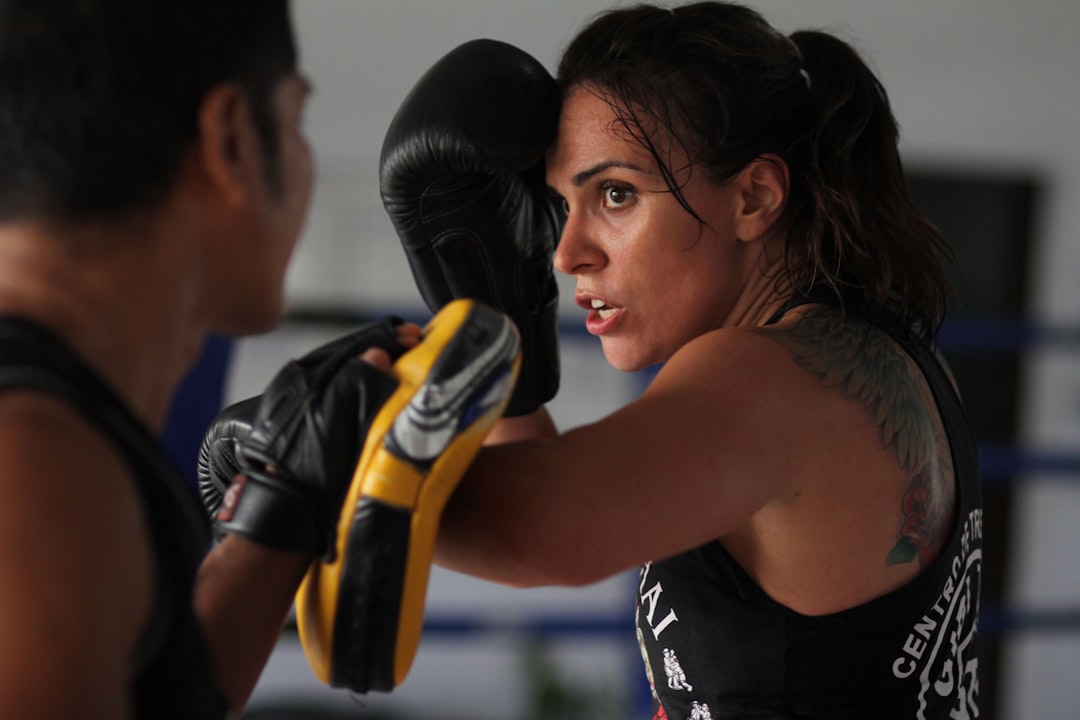
- Pad drills with a partner. Have a partner hold Thai pads and call combinations that include the roundhouse. This trains you to throw the kick in context, with timing and distance.
If you are training at a Muay Thai gym in Texas, ask your instructor to watch your roundhouse and point out which of these mistakes you are making. A trained eye will catch subtle errors that are invisible when you are moving at full speed.
Conclusion
The Muay Thai roundhouse is a technique you will refine for your entire training career. The key takeaways are simple: turn your support foot, rotate your hip fully, strike with the shin, and follow through the target. Drill these fundamentals in slow motion, then apply them at full speed on the bag and pads. Whether you train in Houston, Austin, or San Antonio, mastering this kick will transform your striking game. Ready to find a gym to practice in? Browse our Muay Thai gym directory and start training today.
Frequently Asked Questions
How long does it take to learn the Muay Thai roundhouse kick?
You can learn the basic motion in a single class, but developing a powerful, reliable roundhouse typically takes three to six months of consistent training. Most practitioners continue refining the kick for years. Training two to three times per week at a qualified Muay Thai gym in Texas will accelerate your progress significantly.
Does the Muay Thai roundhouse hurt your shin?
Initially, yes. Shin conditioning takes time and involves micro-stress to the bone that strengthens it over weeks and months. Start with light bag work and gradually increase intensity. Most Texas Muay Thai gyms will guide beginners through proper shin conditioning to avoid injury.
What is the difference between a Muay Thai roundhouse and a karate roundhouse?
The Muay Thai roundhouse swings through the target with the shin and uses full hip rotation, while the karate roundhouse (mawashi geri) typically snaps back and strikes with the instep or ball of the foot. The Muay Thai version generates more raw power, while the karate version is faster and more controlled.
Comments